 Ignorer et passer au contenu
Madurasherbals
Olive Squalene
Impossible de charger la disponibilité du service de retrait
Product Description :
INCI Name: Squalane
Chemical Name: 2,6,10,15,19,23-Hexamethyltetracosane
CAS Number: 111-01-3
Category: Cosmetic Ingredient / Emollient / Skin Conditioning Agent
Olive Squalane is a lightweight, highly stable, plant-derived emollient obtained from the hydrogenation of squalene, which is naturally present in olive oil. It is widely used in skincare, haircare and personal care formulations because of its excellent skin-conditioning properties, lightweight texture and ability to provide a silky, non-greasy feel.
Squalane is the saturated and more oxidation-stable form of squalene. Naturally occurring squalene is also found in human sebum, where it contributes to the skin's natural lipid composition. Through hydrogenation, squalene is converted into squalane, resulting in a stable ingredient with improved resistance to oxidation.
Olive-derived squalane is particularly valued in modern cosmetic formulations as a plant-based alternative to traditionally sourced animal-derived squalane. It is a clear, colourless, odourless liquid with an exceptionally smooth texture that spreads easily across the skin without leaving a heavy or sticky residue.
Key Properties and Functional Benefits
1. Lightweight Emollient
Olive Squalane acts as an excellent emollient, helping soften and smooth the skin. Its lightweight texture provides comfortable moisturisation without the heavy or greasy feeling associated with some traditional oils.
2. Supports Skin Barrier Function
Squalane helps replenish the skin's surface lipids and supports the skin's natural protective barrier. It helps minimise moisture loss and maintain soft, supple and healthy-looking skin.
3. Excellent Skin Compatibility
Squalane has a structure similar to naturally occurring lipids in human sebum. This makes it a popular ingredient in formulations designed for different skin types, including dry, oily and combination skin.
4. Non-Greasy Skin Feel
One of its most desirable properties is its smooth, silky and lightweight after-feel. It absorbs and spreads easily, making it suitable for facial serums, moisturisers and lightweight facial oils.
5. Helps Reduce Moisture Loss
Squalane acts as an emollient that helps reduce transepidermal water loss (TEWL) by supporting the skin's surface lipid layer. It helps maintain skin softness and hydration.
6. Antioxidative Stability
Unlike squalene, which is highly susceptible to oxidation because of its multiple double bonds, squalane is fully saturated and offers excellent oxidative stability. This makes it a reliable ingredient for oil-based skincare formulations.
7. Hair Conditioning Benefits
Squalane can also be used in haircare products to improve smoothness, softness and manageability. It helps reduce the rough feel of hair and adds a lightweight conditioning effect.
8. Suitable for Different Skin Types
Its lightweight, non-comedogenic reputation and excellent skin feel make it a popular choice in products formulated for dry, oily, combination and mature skin. However, individual skin responses may vary.
Applications in Cosmetic and Personal Care Formulations
Olive Squalane is a versatile ingredient used in a wide range of cosmetic formulations.
Skincare Applications
-
Facial serums and facial oils
-
Moisturising creams and lotions
-
Day creams and night creams
-
Skin barrier repair formulations
-
Anti-ageing skincare products
-
Under-eye oils and roll-on formulations
-
Makeup removers and cleansing oils
-
Body oils and moisturising balms
-
Lip care formulations
Haircare Applications
-
Hair serums
-
Leave-in conditioners
-
Hair masks
-
Scalp-conditioning oils
-
Hair smoothing formulations
-
Split-end conditioning products
Specialised Formulations
-
Natural and plant-derived skincare products
-
Lightweight facial oil blends
-
Massage oils
-
Oil-based cosmetic formulations
-
Premium skin-conditioning products
Recommended Usage Percentage
The recommended concentration depends on the product type and desired sensory properties.
|
Application |
Suggested usage |
|---|---|
|
Facial serums |
2–10% |
|
Facial oils |
10–100% |
|
Moisturising creams |
1–5% |
|
Body lotions |
1–5% |
|
Under-eye formulations |
2–10% |
|
Hair serums |
1–10% |
|
Lip balms |
1–5% |
|
Cleansing oils |
2–15% |
These are suggested formulation ranges rather than fixed regulatory limits.
Formulation Guidelines
-
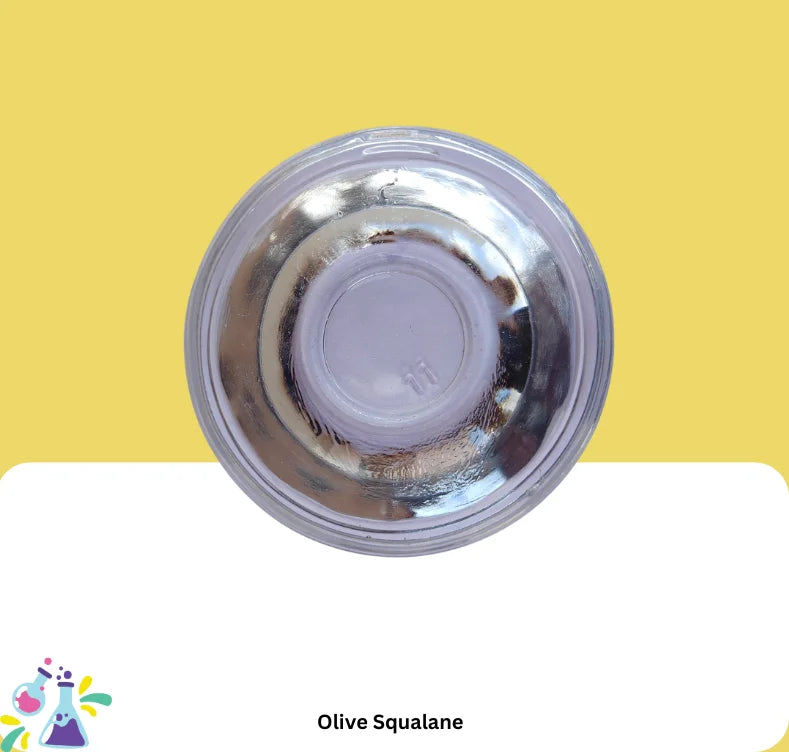
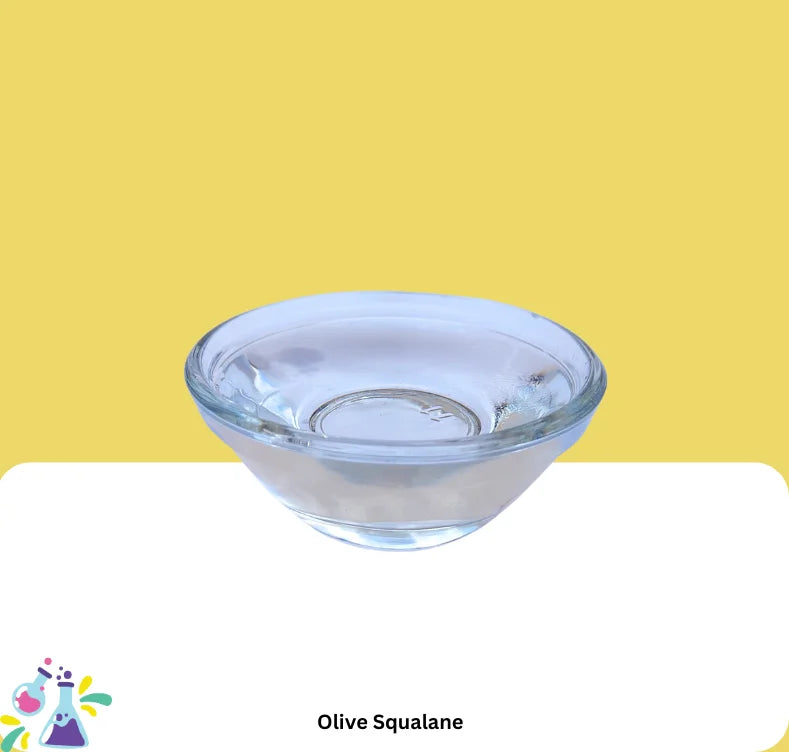
Appearance: Clear, colourless liquid.
-
Odour: Odourless.
-
Texture: Lightweight, silky and non-greasy.
-
Solubility: Insoluble in water; soluble in oils and compatible lipophilic ingredients.
-
Nature: Non-ionic, oil-soluble emollient.
-
Phase: Oil phase.
-
Processing: Can be added directly to the oil phase or during the cool-down stage of emulsions.
-
Heat stability: Generally suitable for conventional cosmetic processing temperatures, although unnecessary prolonged heating should be avoided.
-
Compatibility: Compatible with vegetable oils, esters, butters, waxes, oil-soluble vitamins and other lipophilic cosmetic ingredients.
Squalane does not act as an emulsifier. For water-based creams and lotions, it must be incorporated using a suitable emulsifying system.
Disclaimer:
The above information is for educational purposes only and is not intended as professional advice. As these are cosmetic and formulation-grade chemicals, variations in colour, consistency, strength, and performance may occur between batches due to sourcing, purity level and/or make/brand. These chemicals are supplied strictly as raw materials for use across multiple industries and may not follow any single standard. Since each industry has its own specifications and performance requirements, customers are responsible for testing samples in their formulations and confirming compatibility before purchasing larger quantities. Customers can request up to 3 different samples. Sample sizes will be decided by us (Maduras Herbals Pvt Ltd). These samples are free***, but shipping charges apply. We also recommend purchasing products in standard packaging sizes. All purchases on our website fall under B2B transactions. Laboratory test reports can be arranged on request at an additional cost.
Please read our Terms & Conditions, Privacy Policy, Shipping Policy, and Refund Policy available on our website.
Disclaimer
All information on this website is for educational and reference purposes only and does not constitute medical, professional, legal, or technical advice.
Intended Use
Our products are raw materials and ingredients supplied for cosmetic formulation, personal care, manufacturing, aromatherapy, candlemaking, soap making, food and beverage, confectionery, research, and related industries. Suitability for any specific application is the buyer's responsibility.
Natural & Batch Variation
Natural variations in colour, aroma, texture, viscosity, and potency may occur between batches, as this is characteristic of natural and plant-derived ingredients and does not indicate a quality defect.
For formulated and processed products, including chemicals, waxes, bases, butters, and extracts, variations in performance or specification may also occur between batches.
For colouring agents and food colours, variations in shade, intensity, particle size, dispersion, and thickness may occur between batches due to sourcing or processing differences. For flavor oils, variations in colour, taste profile, and aromatic strength may occur between batches.
Equipment & Kits
Equipment, accessories, moulds, containers, and kits are utility and starter-level items with no performance warranty. Product images, kit contents, and item brands or models may vary based on stock availability.
Safety & Internal Use
Essential oils, aroma compounds, flavor oils, concentrated extracts, and chemicals must be handled responsibly and diluted appropriately. Products intended for internal use, including herbal powders, Ayurvedic botanicals, and food-grade ingredients, should be used under the guidance of a qualified healthcare, Ayurvedic, or food safety practitioner.
Testing, Samples & Lab Reports
Customers are responsible for testing suitability within their own formulation and intended application before placing bulk orders. Samples are at your own cost, and free samples may be available subject to stock and product type. Sample size and quantity are at our discretion, and shipping charges apply. Laboratory test reports can be arranged on request at an additional cost.
Representative Documents: COA & MSDS
The COA and MSDS linked on product pages are representative documents shared for reference purposes only and may not reflect the exact batch supplied for your order.
Batch-specific documents can be requested before or at the time of purchase. It is the customer's responsibility to verify that specifications meet their intended use before purchasing in bulk.
B2B Terms
All transactions on this website are B2B in nature. By purchasing from us, you agree to our Terms & Conditions, Privacy Policy, Shipping Policy, and Refund Policy.