 Ignorer et passer au contenu



Madurasherbals
Pumpkin Seed Oil
Impossible de charger la disponibilité du service de retrait
Product Description:
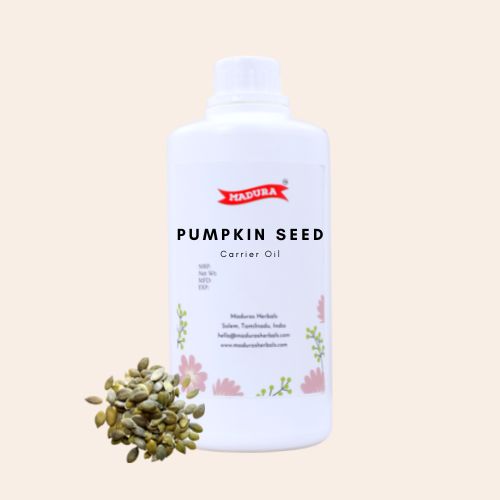
Pumpkin Seed Oil is a cold pressed carrier oil extracted from the seeds of the pumpkin (Cucurbita pepo), a plant botanically related to cucumbers, melons, and gourds. The oil is dark green to reddish brown in colour with a distinctive nutty scent and a medium consistency that absorbs into the skin without leaving a heavy residue. Pumpkin Seed Oil is recognised among formulators as a stable, long lasting carrier oil, making it a dependable choice across skin and hair care applications. At Maduras Herbals, we supply Pumpkin Seed Oil as a raw material for cosmetic manufacturers, DIY formulators, and skin care product developers looking for a nourishing, stable carrier oil.
Botanical and Local Names
Botanical Name: Cucurbita pepo
English Name: Pumpkin Seed Oil
Hindi Name: Kaddu Beej Tel
Tamil Name: Poosanikkai Vidhai Ennai
Telugu Name: Gummadikaya Ginja Nune
Malayalam Name: Mathanga Kuru Enna
Kannada Name: Kumbalakayi Beeja Enne
Key Properties
- Cold pressed from pumpkin seeds with no heat and no chemical solvents involved
- Medium consistency with a distinctive nutty scent and dark green to reddish brown colour
- Naturally rich in essential fatty acids, zinc, and Vitamin E
- Unrefined and supplied in its natural state without bleaching or deodorisation
- Notable for its natural stability and longer shelf life compared to many other carrier oils
- Low comedogenic profile, suited for most skin types including sensitive skin
- Compatible with other carrier oils, butters, and oil-phase ingredients
About Pumpkin Seed Oil
Pumpkin seed oil is cold-pressed from the seeds of Cucurbita pepo, the pumpkin or field pumpkin. The highest quality pumpkin seed oil for both culinary and cosmetic use comes from oil-grade naked seed varieties, primarily the Styrian pumpkin from Austria, which has been cultivated specifically for its oil-rich seeds for several centuries. Most commercially available oil-grade pumpkin seed oil is sourced from Austria, Eastern Europe, or China, as the naked-seed variety required for efficient oil production is not widely grown in India. The oil pressed from these seeds is notably rich and dark in colour.
Pumpkin seed oil has a distinctive fatty acid profile with linoleic acid typically making up the largest proportion at around 45 to 60%, followed by oleic acid at around 20 to 35%, alongside palmitic and stearic acid. This composition gives it good emollient and anti-inflammatory properties, and its high linoleic acid content makes it particularly relevant for acne-prone and oily skin formulations. The oil also contains phytosterols, tocopherols, carotenoids, and zinc, which together contribute to its antioxidant and skin-conditioning properties. Its deep green colour — one of the most vivid of any carrier oil — comes from its high chlorophyll content and will significantly affect the appearance of any formulation it is added to.
| Property | Detail |
|---|---|
| INCI Name | Cucurbita Pepo Seed Oil |
| Sourced From | Central America in origin; oil-grade production primarily from Austria and Eastern Europe; also produced in China |
| Processed & Packed | Processed & Packed in India |
| Function | Emollient, skin conditioning, antioxidant |
| Absorption Rate | Typically medium; may feel slightly richer than lighter oils due to its dense nutritional profile |
| Recommended Usage Amount | Typically 5 to 30% in blended formulations; colour intensity makes it less practical at higher percentages in most products |
| Heat Stability | Generally moderate; best added below 40°C to preserve tocopherol and carotenoid content |
| Colour | Typically very deep green to dark reddish brown depending on grade; one of the most intensely coloured carrier oils and will visibly affect formulations |
| Scent | Characteristic nutty, earthy aroma; intensity may vary between batches and grades |
| Oxidation Stability | Generally moderate; antioxidant support and cool dark storage recommended due to high linoleic acid content |
| Restrictions | None widely documented; deep colour must be accounted for in product development |
| Substitution | Sesame oil can partially substitute; no direct substitute for its specific colour and nutritional profile |
Working with Pumpkin Seed Oil in Your Formulations
Pumpkin seed oil works well in facial oils, serums, hair oils, balms, and emulsions, and is particularly suited to formulations targeting acne-prone, oily, or mature skin. Its deep colour makes it most practical at lower usage percentages blended with lighter oils, or in products where a naturally dark colour is expected or can be marketed as part of the product's identity. It blends well with jojoba, argan, and rosehip oil for premium facial oil formulations.
Quality & Formulation Notes
No adverse effects or formulation restrictions are widely documented for pumpkin seed oil. Its intense colour is the most important practical consideration in formulation — even at modest usage rates it will significantly affect the finished product's appearance. Antioxidant support and cool dark storage are recommended given its relatively high linoleic acid content. Confirming the seed variety and origin with your supplier is worthwhile given the significant difference between oil-grade naked-seed pumpkin and standard pumpkin seeds in terms of oil content and quality.
Applications
Skin Care Formulations: Facial oils, serums, anti-ageing creams, body lotions, lip care formulations
Hair Care Formulations: Hair oils, scalp serums, leave-in conditioning treatments, hair masks
Cosmetic Formulation: Carrier base for essential oil and aromatherapy blends, lotion and cream oil-phase ingredient
General Use: Bulk supply for cosmetic manufacturers, DIY skin and hair care kits, salon and spa product formulations
Packing and Storage
Store in a cool, dry place away from direct sunlight and heat. Keep the container tightly sealed when not in active use. Recommended storage temperature below 25°C. Pumpkin Seed Oil is naturally stable with good resistance to oxidation. Best before 18 months from packaging date. Natural variation in colour and scent between batches is characteristic of a cold pressed, unrefined oil.
Caution
Patch test is recommended before use on skin. In case of any allergic reaction, discontinue use and consult a dermatologist or physician.
Disclaimer
All information on this website is for educational and reference purposes only and does not constitute medical, professional, legal, or technical advice.
Intended Use
Our products are raw materials and ingredients supplied for cosmetic formulation, personal care, manufacturing, aromatherapy, candlemaking, soap making, food and beverage, confectionery, research, and related industries. Suitability for any specific application is the buyer's responsibility.
Natural & Batch Variation
Natural variations in colour, aroma, texture, viscosity, and potency may occur between batches, as this is characteristic of natural and plant-derived ingredients and does not indicate a quality defect.
For formulated and processed products, including chemicals, waxes, bases, butters, and extracts, variations in performance or specification may also occur between batches.
For colouring agents and food colours, variations in shade, intensity, particle size, dispersion, and thickness may occur between batches due to sourcing or processing differences. For flavor oils, variations in colour, taste profile, and aromatic strength may occur between batches.
Equipment & Kits
Equipment, accessories, moulds, containers, and kits are utility and starter-level items with no performance warranty. Product images, kit contents, and item brands or models may vary based on stock availability.
Safety & Internal Use
Essential oils, aroma compounds, flavor oils, concentrated extracts, and chemicals must be handled responsibly and diluted appropriately. Products intended for internal use, including herbal powders, Ayurvedic botanicals, and food-grade ingredients, should be used under the guidance of a qualified healthcare, Ayurvedic, or food safety practitioner.
Testing, Samples & Lab Reports
Customers are responsible for testing suitability within their own formulation and intended application before placing bulk orders. Samples are at your own cost, and free samples may be available subject to stock and product type. Sample size and quantity are at our discretion, and shipping charges apply. Laboratory test reports can be arranged on request at an additional cost.
Representative Documents: COA & MSDS
The COA and MSDS linked on product pages are representative documents shared for reference purposes only and may not reflect the exact batch supplied for your order.
Batch-specific documents can be requested before or at the time of purchase. It is the customer's responsibility to verify that specifications meet their intended use before purchasing in bulk.
B2B Terms
All transactions on this website are B2B in nature. By purchasing from us, you agree to our Terms & Conditions, Privacy Policy, Shipping Policy, and Refund Policy.